 sales@istof.in
 +91 9560255033
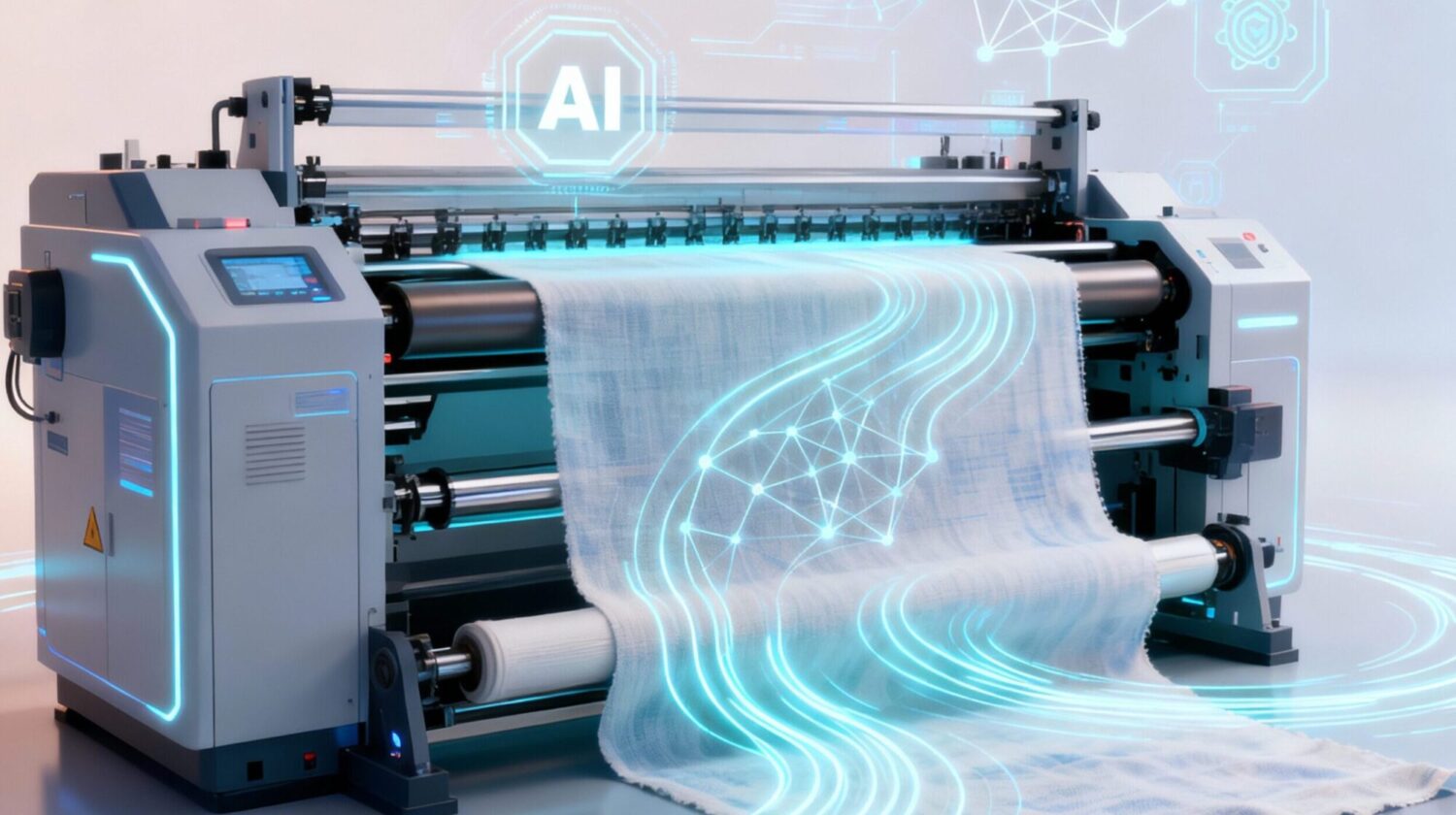
If you’ve ever stood next to a rotary textile printer in full swing, you know the definition of speed. The sound is a deafening hum, and the blur of fabric moving over the rollers is almost hypnotic. These machines are marvels of production, printing thousands of meters of intricate designs every hour.
But that incredible speed has always had an Achilles’ heel: Quality Control.
For decades, the “solution” was to post operators along the line. This often meant workers straining their eyes, bending over the rapidly moving fabric, trying to catch a flaw with the naked eye.
It’s a physically demanding, mentally fatiguing, and ultimately impossible task. At those speeds, a subtle colour bleed, a small smudge, or a slight mis-registration is invisible. A defect could be repeated for hundreds of meters before it’s caught, if it’s caught at all. This leads to entire rolls being downgraded to “seconds,” or worse, rejected by the customer.
But what if you could give your operators a superpower? What if they could see every single thread, of every single meter, perfectly?
That’s exactly what AI-powered inspection is doing for the textile industry.
The “Old Way” vs. The “AI Way”
The problem with traditional inspection is simple: humans can’t keep up with machines. The video reference makes this clear, stating it’s “Impossible to catch defects with naked eyes at such high speed.”
The “AI way” completely changes the operator’s job, from searching for defects to acting on them.
The AI system consists of three key parts:
- High-Definition Cameras: These are the “eyes.” Mounted directly over the printed fabric, they scan the entire width of the web, capturing a crystal-clear image of 100% of the material in real-time.
- AI-Powered Processing Unit: This is the “brain.” It’s not just a simple computer. It runs a deep-learning algorithm that has been trained on what a “perfect” print looks like. In milliseconds, it compares the live image from the cameras to that “golden standard.”
- Display Unit: This is the new command centre. The operator no longer looks at the fabric; they look at the screen.
Beyond Just Finding Defects: Superhuman Analysis
This is where the magic happens. An AI system doesn’t just “see” a flaw; it understands it.
Spotting the Invisible
An AI model can detect issues far beyond human capability, such as minor misregistration, print flaws, fabric defects etc
The New Workflow: From Straining to Steering
The new process is a game-changer for the operator: “No need to look at running fabric to catch defects. Just focus on the screen…”. When the AI detects and confirms a flaw, it immediately:
- Alerts the operator on the display unit.
- Classifies the defects based on your own defined categories.
- Logs the exact location of the flaw on the roll.
- Triggers an alarm or can even be set to automatically stop the press if the defect is critical.
The operator’s job is no longer one of impossible, manual inspection. Their new role is to use this data to take action. They can make an informed decision to clean a screen, adjust ink viscosity, or stop the line for a correction, all based on precise, real-time data.
The Real Business Impact
- Drastic Waste Reduction: Catching a defect on the first instance, not after a 500-meter run, saves thousands in fabric, ink, and energy.
- Guaranteed Quality: You can confidently ship every roll knowing it has been 100% inspected and meets the customer’s exact standards.
- Higher Throughput: You can run your presses at their maximum rated speed, knowing the AI is your safety net.
- Predictive Maintenance: The AI logs all data. If it sees a tiny streak starting to form from the 4th screen every 10 meters, it can alert you to clean that screen before it becomes a press-stopping problem.
In short, AI-powered inspection finally solves the core conflict in textile printing: it allows you to achieve maximum quality at maximum speed.